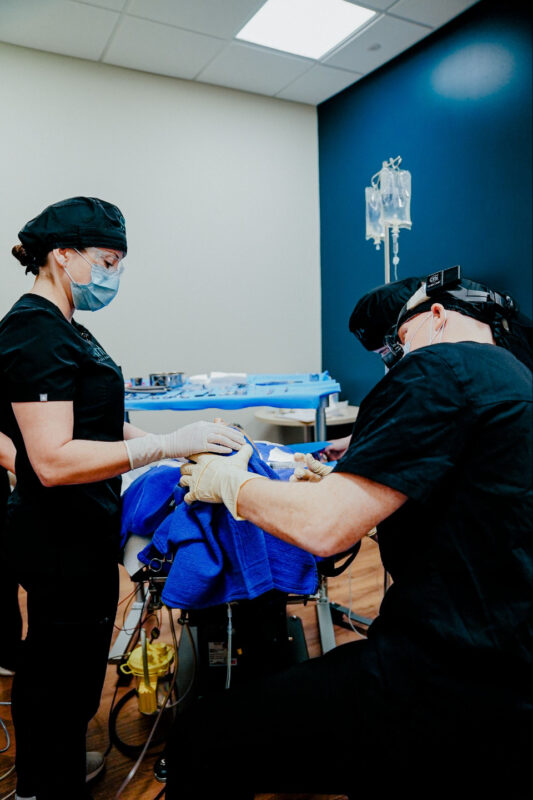
What Is Included in Facial Feminization Surgery?
What is included in facial feminization surgery? A lot more than most people realize.
From forehead contouring to jaw reshaping, lip lifts to tracheal shaves, this article will walk you through every available option.
As a board-certified surgeon, I’ve helped hundreds of patients customize their procedures to reflect exactly who they are. If you’ve only seen basic checklists online, this article is different. We’re going deep into what’s possible, what’s typical, and how to build a plan that fits you.
FFS can be life-changing, but knowing where to start can be tough. That’s why I’ve created a complete video playlist to guide you throughout the process.
Ready for your appearance to align with your identity? Book your free FFS consultation with CMF Surgeons today—let’s create the look you’ve always wanted.
Am I A Good Candidate for Facial Feminization Surgery?
Essentially, anyone who looks at their face and identifies something that over-masculinizes them may be a candidate for FFS. This might include features like the hairline, brow ridge, voice box, or nose.
While most patients pursuing FFS are going through a gender-affirming process, you do not need to be transgender to benefit from facial feminization. However, for most of my patients, FFS is part of their transition journey.
So, What Is Included in Facial Feminization Surgery?
In FFS, it really depends on the individual. Let’s break down the most common procedures:
Hairline Advancement
A masculine hairline is often higher or shaped to reveal more of the forehead. Hairline advancement is a common procedure to feminize this feature, helping create a lower, softer hairline that brings better balance to the upper face.
Brow Reshaping (Forehead Feminization)
This is probably the most common procedure. People with a prominent brow ridge, especially over the outer parts of the eyes, often benefit from forehead feminization, which smooths the brow contour and creates a softer, more traditionally feminine upper facial profile.
Rhinoplasty
Rhinoplasty is another common part of FFS. I try to blend the nose with the overall aesthetic of the face we’re shaping, refining size, shape, or angles in a way that complements other feminizing changes rather than drawing attention to the nose itself.
Cheek Augmentation
This can be done with either implants or fat grafting, depending on your goals, and is often used to add softness and contour to the midface while improving overall facial balance.
Jaw and Chin Reshaping
Procedures like jawline contouring and genioplasty (chin reshaping) are also very common, helping reduce angularity and create smoother, more proportionate lower facial contours.
Tracheal Shave
This reduces the prominence of the Adam’s apple, a distinctly masculine feature, and can help create a smoother neck contour that aligns more closely with other feminizing facial changes.
Additional Procedures
Other options include:
- Lip lift
- Buccal fat removal
- Eyelid surgery (blepharoplasty)
- Brow lift
There are several options, and we can help you identify which concerns you most and build a personalized surgical plan.
What to Expect from the FFS Surgical Process
Consultation
We always start with a consultation. On average, we see most patients within 2 weeks.
One-Stage Surgery
Most FFS procedures that I perform are done in one stage. This is my preference; I’m very comfortable with it, and it’s how I was extensively trained.
That being said, it’s up to the individual. If you want to break it up into several procedures, we can handle as few as one at a time—but completing multiple procedures in a single phase allows for one consolidated recovery, helping many patients return to daily life sooner with less overall downtime.
Anesthesia and Duration
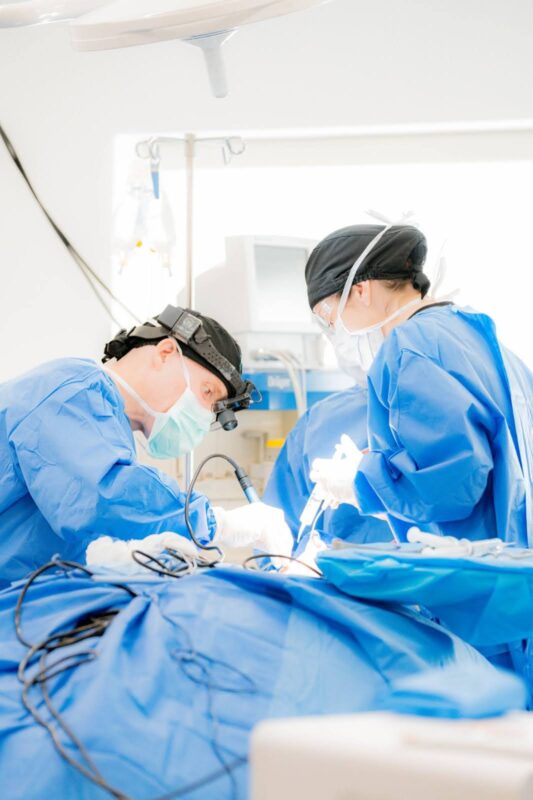
These surgeries are performed under general anesthesia: you’ll be fully asleep with an anesthesiologist monitoring you. Most procedures take anywhere from 8 to 10 hours when performed in a single stage.
Even after 8 to 10 hours of surgery, most of my patients go home the same day. The benefit of that is that you’re home, you’re comfortable, and we’ll make sure you’re safe.
We always make sure this is the right care decision for you, but most of my FFS procedures are done on an outpatient basis.
FFS Recovery and Aftercare: Full Timeline
Swelling and Pain Management
Recovery after FFS is mostly swelling. Everybody blows up like a balloon, and it is always the worst part about working on or around the face. There’s nowhere for the swelling to go but outward.
Many patients report pain and discomfort, but we take a preemptive approach to pain control. We make sure you’re taking your medicine regularly to prevent pain from rising in peaks. We like to keep a consistent level of general discomfort, which is easily controlled with medication.
That medication typically includes an anti-inflammatory, Tylenol, and then stronger pain medicine every 2 to 3 hours.
Dressings and Follow-Ups
- If we work on the forehead or neck, we’ll use a head wrap
- Rhinoplasty patients will wear a nasal cast
- We typically do a virtual post-op visit on day one, during which the head wrap comes off, and you can shower.
- After that, you’ll start icing the area and can later switch to heat.
Pain Timeline
- Day 3: Most patients are either off the stronger pain medication or tapering down.
- Days 5–7: Most patients are off their regular naproxen use.
- Days 7–10: Most patients are off their regular Tylenol use.
The majority of the recovery happens within the first week. Most of that recovery is within the first three days. Again, it’s mostly swelling, general aches, and discomfort.
We’ll also put you on a soft diet for a couple of days and make sure you stay hydrated. We’ll make sure you get up, move around, and prevent yourself from becoming a slug in the chair or the bed.
The more that you get up and move around, the better that you will fee
When Will I See My Final Results?
- Weeks 2 to 6 are when you’ll start to see many things take shape.
- At week 2, you’ll look very similar to how you did the day before the surgery.
- At week six, you’ll start to see better definition. About 90+% of your swelling will be gone, and you’ll see your jawline and forehead, and be able to move your eyebrows and breathe through your nose.
A lot of the functional and swelling-reduction elements of recovery are already in place.
- At the three-month mark, which we call our final result, you have between 2 and 5% of your swelling remaining. Most of that swelling takes about a year to go away.
From month 3 to month 12, most patients don’t notice a major difference, because it happens over such a protracted timeline. The full healing cycle is about 12 months.
At the one-year mark, you’ll see your full outcome with essentially no surgical edema.
Risks and Considerations: What to Know Before FFS
The risks of facial feminization surgery are mostly related to numbness. We make incisions, so there’s always a possibility that it scars more than we want it to, and there’s always a risk of infection.
Common Risks
- Infection happens between week one and week two, and then closer to week six. The risk is somewhere between 1 and 5% for most patients, and we monitor this very closely.
- Hematomas, blood clots, and open wounds are generally in the early stages of the healing process.
- By the two-week mark, most of the wounds have most of their final strength. From week two and beyond, we focus mostly on managing the wounds.
Numbness and Nerve Effects
The most significant thing patients notice is numbness in certain areas. Anytime we work around the face, we’re stretching on the nerves that provide sensation to your cheeks, lips, and forehead. There will always be little patches of numbness.
Anytime we alter the hairline, there may be short-term numbness in the forehead, jawline, or chin. Generally, most, if not all, of these will come back, if not entirely, then very close to it, except for a couple of areas we will always discuss relative to your final treatment plan.
The Importance of Finding the Right Surgeon
When Facial Feminization Surgery is performed by a surgeon experienced in gender-affirming care, serious complications are uncommon. That experience goes beyond surgical skill—it’s about truly understanding facial feminization and the goals behind it.
The right surgeon knows how to listen, ask the right questions, and build a plan that reflects your identity and vision. You shouldn’t have to explain or justify what you’re seeking. Feeling understood and supported is a key part of achieving results that feel right for you.
Reveal Your True Identity with CMF Surgeons
If you’re considering facial feminization surgery, Dr. Timothy Osborn will guide you through every step, personalizing your procedure to reflect exactly who you are. From consultation to recovery, we’ll work with you to create a plan that feels right for you at every stage of your transition.
Book your consultation today. Let’s reveal your most authentic self.